

One Harmonious Whole: A Western Suburbs District Cricket Club Story
Western Suburbs District Cricket Club Sydney | June 28, 2025
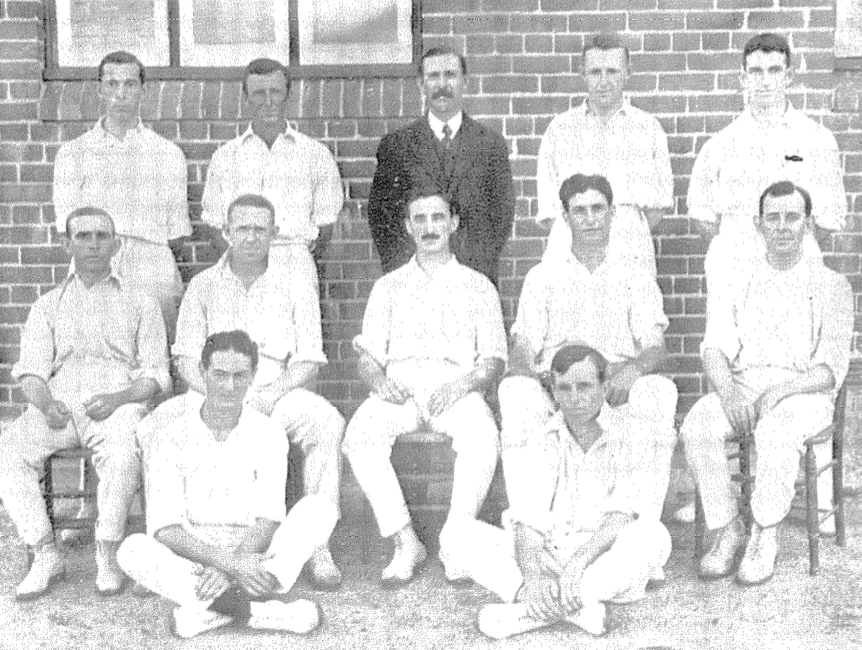
The following article is an extract from our 2006 publication “Cricket in Black and White: 110 Not Out: The history of the Western Suburbs District Cricket Club”.
Australia had already been at war for a month when the 1914-15 cricket season opened. At first, the war had only a limited impact on the daily lives of most Australians, other than those who had joined up early; it was a distant conflict, and few people thought ti would last for long. Except that a number of players were quick to enlist, cricket carried on more or less as though nothing had happened. There was a Sheffield Shield competition, and each Grade club sent out three teams every Saturday.
Wests had finished fourth in the First Grade premiership in 1913-14, and at Christmas 1914, the club was standing fourth again, trailing North Sydney, Waverley and Gordon. The team's batting was unconvincing, but the attack proved adept at defending modest totals. At first it seemed that the team's trump card would be Gerry Hazlitt, whose swerving, medium-paced of breaks had been successful in Test cricket. Hazlitt began the season in ominous form, but his health was poor, and he was forced to give up the game after two matches (nor did he recover: he died in October 1915, aged only 27). But the rest of the attack performed exceptionally well. Harry Dupain began the season slowly before finding his rhythm and swinging the ball at a lively pace; Percy Dive pushed through his leg breaks and googlies accurately and deceptively; and Wybergh Docker was a consistent threat with his left-arm medium pace. The turning point of the season came when the "three Ds" bowled Wests to an innings victory over Middle Harbour, with Dupain (5-19) dominating the first innings and Dive (4-18) the second.
The second half of the season was a sprint for the line, with North Sydney clinging to - but never extending - its lead, while Wests narrowed the gap in every round. When the two sides met in February 1915, Wests' indifferent batting faltered again: al out for 153. But Harry Dupain bowled intelligently and aggressively, taking four for 30 and compelling the batsmen to take unwarranted risks against the slow bowling of Haywood Murray, who was unerringly accurate but "practically did not turn the ball at all". Although there were six first-class players in the North Sydney team, they collapsed to Dupain andMurray, on a good pitch, for only 130. One onlooker attributed the victory, not ot the bowlers, but to Austin Diamond, whose leadership was of an order we do not see every day in grade cricket. It was the inspiring control we see occasionally in International cricket, the bowlers being handled with the care of one who knows the exact strength of his men, their capacity for work, and their values against the different batsmen. The field was placed with the nicest of variations without becoming finicky. It is a treat to see captaincy of this order in club cricket.
Chemist Warehouse Ashfield is a proud sponsor of Western Suburbs District Cricket Club

Urged on by Diamond, Western Suburbs maintained its momentum throughout February and March; the batting, led by Jack Myers (103) and Bert Pratten (88), finally fired against Gordon, and then Sydney was cut down by Dupain and Docker. Yet North Sydney held its lead going into the last round of the season - when it was drawn to play Western Suburbs at St Luke's in a match that amounted to a final. Luck was with Diamond, who won the toss and asked his visitors to bat first on a wet pitch. The slow turf nullified Harry Dupain's pace, but was perfect for Wybergh Docker, who "maintained a capital length with just sufficient spin to make playing out to him a hazardous undertaking. Several of the batsmen found that out, and at least three were caught through the ball hanging of the pitch just enough to make them send it up."
In only 9.3 overs, Docker took eight for 19, and North Sydney was dismissed for 60. But Norths’ captain, Bert Hopkins, was a Test bowler who could swerve and spin the ball dangerously, and could do anything Wybergh Docker could do. Within a few overs, he reduced Wests to four for 14. Inexplicably, though, Hopkins chose to bowl without a slip, and several edges flew harmlessly by the wicket- keeper as Keith Docker, Joe Taylor and Wybergh Docker chiselled out a first innings lead. Wests were all out for 92 late in the day - a lead of 32, which was handy, but not enough: first innings points did no more than bring the two sides level, so that unless there was an outright result on the second day, the match would be replayed to decide the premiership.
North Sydney appeared to be headed for safety at one for 56 on the second day, but Harry Dupain, in an inspired spell, and Percy Dive, swept through the middle order. Wybergh Docker wrapped up the innings with 3-9, and Wests needed only 93 to win outright. Jack Myers, Ward Prentice and Bert Pratten needed less than an hour to knock off the runs. Wests had never led North Sydney until the very last ball of the competition had been bowled.
Wests' success was regarded as a personal triumph for Austin Diamond, who had held the side together with shrewd captaincy, stubborn batting and brilliant fielding. He wielded together a side which embraced a certain number of loose ends into one harmonious whole, both in respect to play and camaraderie, and his reward has been the premiership.

BeaconPoint Club Clips - Phil Jaques on Batting: Mindset, Method and Making Runs