

Claude Tozer: What might have been
Gordon District Cricket Club | June 12, 2026
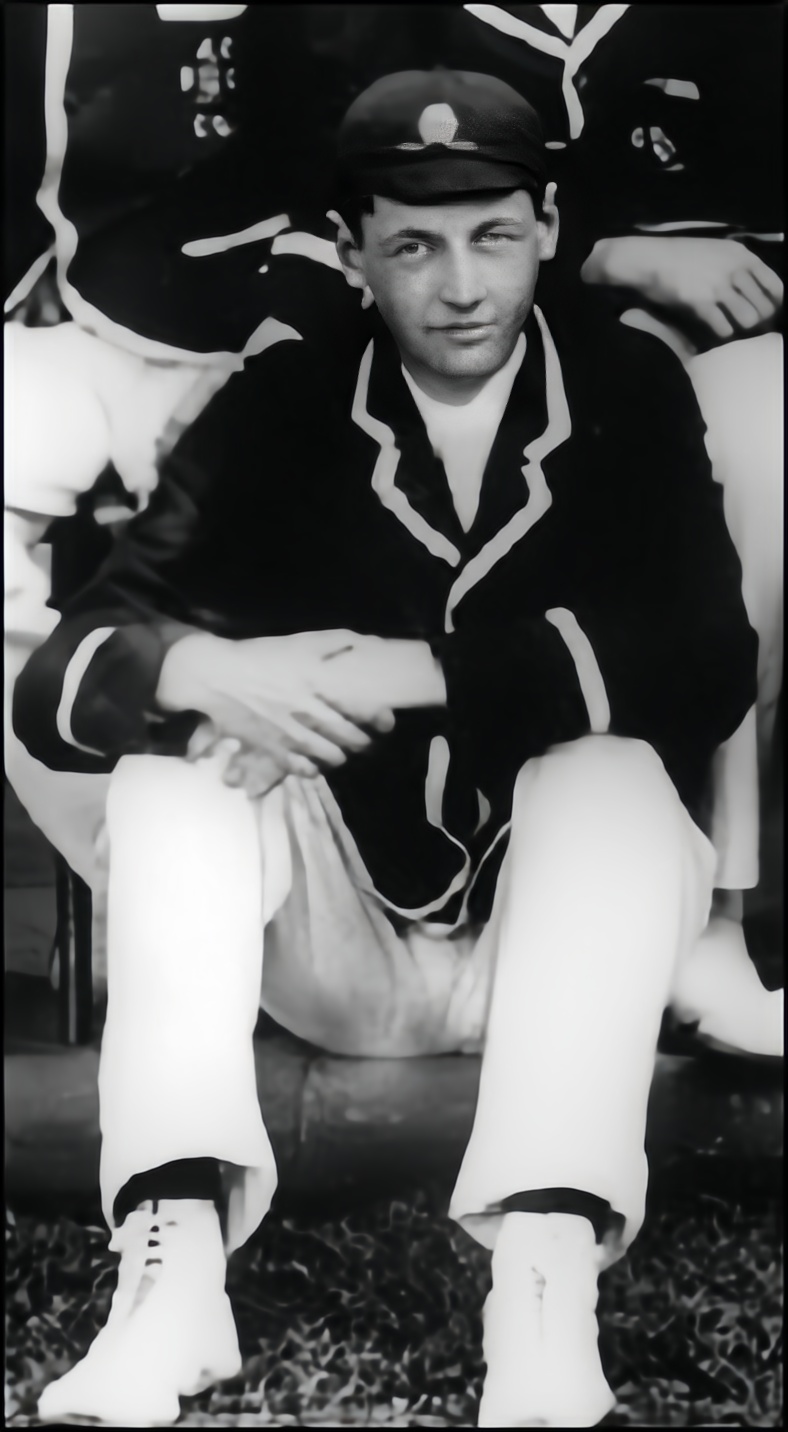
One of the most tragic figures of the First World War period was Dr. Claude Tozer, whose meteoric rise and shocking end became one of cricket's most heartbreaking stories. Born September 27, 1890, Tozer had been a recognised University player before the war, twice heading the First Grade batting aggregate lists with averages above 70.
His path to cricket stardom was interrupted by the Great War, where he served with extraordinary distinction. Enlisting in the Australian Army Medical Corps in May 1915, Tozer quickly rose to the rank of captain and was posted to the 1st Field Ambulance at Gallipoli. Following the evacuation, he was hospitalised in Egypt with paratyphoid in early 1916. Later that year, he served on the Western Front and was severely wounded in the head and right leg during the Battle of Pozières in July 1916.
Following an extended convalescence, Tozer returned to France in January 1917, serving in various capacities in hospitals and field units. He was promoted to Major in June 1917. In November 1917, he was mentioned in dispatches by Field Marshal Douglas Haig for "distinguished and gallant service and devotion to duty in the field" and awarded the Distinguished Service Order—one of the British Empire's highest military honours for gallantry.
When Tozer returned to Sydney after his discharge in 1919, he established a medical practice as a North Shore GP and resumed his cricket career with Gordon for the 1919-20 season. His powerful driving immediately caught attention as he scored 489 runs at 48.90 from 11 innings with a century and four fifties, joining Gordon's growing list of NSW representatives. Cricket observers noted that the war seemed to have added steel to his game; his stroke play was more authoritative, his concentration more intense.
The 1920-21 season began extraordinarily. Tozer opened with 110 against Balmain, followed by a commanding 211 against University in just his second match. His third innings brought 131 against Paddington: three centuries in three completed innings. After four matches, he had scored 491 runs at an incredible average of 122.75, a Gordon record that still stands.
Earlier in December, Tozer had scored 51 and 53 for an Australian XI against the English touring side in Brisbane. Frank Iredale summed up in the Sun: "I don't suppose that at the moment there is a sounder player in the state." On Monday, December 20, Tozer sat in the Members' Stand at the SCG watching Australia build an unassailable lead of 658 in the First Test. He had been named captain of NSW for the match against Queensland scheduled for New Year's Day 1921. Test selection appeared imminent.
Behind this cricket success, however, Tozer's personal life was becoming complicated. Among his patients was Dorothy Mort, the 33-year-old wife of civil engineer Harold Mort. Dorothy had been suffering from severe depression following her father's suicide and what contemporary reports described as "neurasthenia." During the course of treatment over approximately six months, an alleged intimate relationship had developed between doctor and patient.
Tragedy struck on Tuesday, December 21, 1920. Tozer made a house call to the Mort residence, 'Inglebrae', in Tryon Road, Lindfield, reportedly to end the relationship. According to the testimony of Florence Fizzelle, the lady's companion who was elsewhere in the house, shots were heard from the locked drawing room approximately ten minutes into the consultation. Mrs Mort assured her through the doors that all was well and requested a glass of iced water. More shots were heard ten minutes later.
When police forced entry to the drawing room that evening, they found Tozer's body seated on the Chesterfield sofa. He had been shot three times—twice in the head and once in the chest. His vest had been unbuttoned, the fatal shot delivered, and then carefully rebuttoned. Mrs Mort was found in her bedroom with a self-inflicted gunshot wound to her chest and under the influence of laudanum. She survived.
The subsequent trial transfixed Sydney society. Dorothy Mort was found not guilty by reason of insanity and committed to the State Reformatory for Women at Long Bay. After eight years, she was released, deemed "normal mentally," and returned to live quietly with her still-loyal husband Harold until her death in 1966.
On Wednesday, December 22, the Australian team took to the field at the SCG wearing black armbands. It was not the first time cricketers had worn black armbands for Dr. Tozer—they had done so during the war when he was reported wounded at Pozières.
In just one and a half seasons with Gordon, Tozer had scored 980 runs at 70.00 with four centuries and four fifties—figures that suggested a Test career of genuine distinction lay ahead. His death at thirty robbed Australian cricket of what might have been one of its finest batsmen and Gordon of a player who could have defined an era. Today, his name appears in the Gordon record books as a reminder of cricket's most tragic "what if."
Paul Stephenson
Powered by Pink Finance