
Dave Evans was a true Gordon legend - Part 1
Gordon District Cricket Club | July 04, 2025
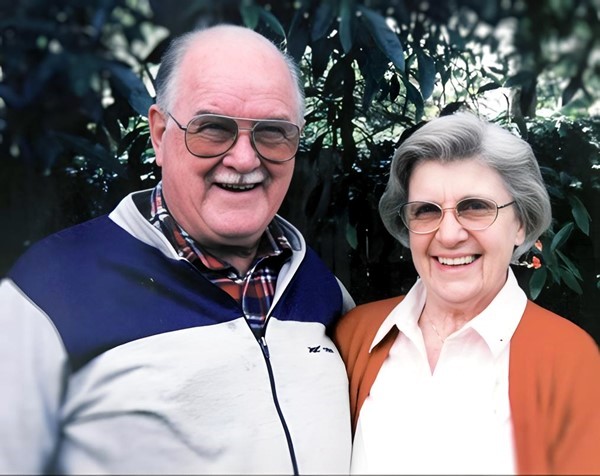
David John Evans was born at Merewether, a suburb of Newcastle, on 13 December 1919. His family moved to Cobar Street, Willoughby, close to that suburb’s boundary with Artarmon, when he was seven. He had two brothers, Trevor and Basil, and went to Artarmon Primary School.
His father, also David, was a keen cricketer who had played First Grade with the Randwick club. This keenness rubbed off on Dave at an early age and he soon found that there was a backyard in Cooney Road, Artarmon, not far away, which was like a miniature Sydney Cricket Ground. Kids from the neighbourhood gathered there frequently for games, and Dave was soon a regular. Fortunately, the parents in that household, Greg, and Bessie, enjoyed cricket too and damage to the garden and broken windows were overlooked - to a degree. Greg played for Artarmon Vets in the local competition.
After playing backyard cricket as a youngster, his keenness for cricket as a young teenager continued and how was it shown? Well, on Saturday mornings, he would leave his home in Cobar Street very early to walk the five kilometres to Longueville Oval, by 8 o’clock.
After leaving school, Dave worked initially as a fitter and turner and then as a mechanical draftsman in the Drawing Office at Cockatoo Island. He studied Engineering at Sydney Technical College which was later absorbed by the University of NSW. Dave did his final examination in November 1941 for a Mechanical Engineering Diploma, excelling in Drawing and Design, Heat Engines, Applied Mechanics, Chemistry and, of course, Maths. In his later application to be an aircrewman for the RAAF, he listed his sports as cricket, tennis, golf, swimming, chess, billiards and Australian Rules football.
Dave married Marjorie Hooff on Anzac Day, 25 April 1942, and for a little while they lived at Kirribilli. That terrible night when three Japanese midget submarines entered Sydney Harbour and scuttled the HMAS Kuttabul with a loss of twenty-one lives was only a month or so after their wedding. There was a lot of noise and commotion on the harbour that night and air-raid sirens went off all over Sydney. As the story is told by their son Steve, Dave and Marjorie hardly stirred. And Marjorie mumbled sleepily ‘what on earth is a goods train shunting on the bridge for, at this time of night?’ Dave replied, ‘I don’t know, go back to sleep!’ The catastrophic events were only a mile or so away but the first they knew of it was the next morning. It was not very long before Dave went off to start his training for entering the war and Marjorie returned to live with her parents.
On 30 March 1944, after completing his training in four locations across Australia, Dave had his first experience offshore when he was posted to the No. 38 Squadron in Richmond, NSW, whose role it was to transport supplies and personnel between Australia and the combat zones in New Guinea and Borneo. This period introduced Dave to the C47 Douglas A65 aircraft in which he did 132.25 hours flying from Richmond.
The inclusion of three Lockeed Hudsons to the No.2 Air Ambulance Unit prompted Dave’s posting to the No.2 Air Ambulance Unit at Archerfield Airfield in Townsville, Queensland, on 4 September 1944.
The unit had operated throughout Australia during 1942 and began flights to New Guinea in 1943. Although it remained based in Australia, it supported the Allied forces engaged in the New Guinea campaign until the end of the war. According to the charter of the Unit as per Ozatwar.com, the goal of the Unit was:
To transport stretcher and sitting up cases of sick and wounded members of the fighting services from battle areas to bases, where medical treatment of hospital facilities is available.’ (Dunn, 1996)
By September 1944, the Unit had 15 Officers and 131 Airmen on strength, and they were operating the flowing aircraft:
- Four Lockheed Hudsons
- Two DH-83 Fox Moths
- Six DH-84 Dragons
- Two Tugan Gannets
- One DH-94 Moth Minor
Dave’s job as a navigator was to find the locations of Australian soldiers or civilians waiting for transport to a hospital, often in the presence of hostile air and ground forces, or in poor and difficult weather conditions. Flying in many different aircraft which often had been well used in other theatres of war also made the task that much more difficult and dangerous.
The Lockheed Hudson was a new flying experience for Dave and he often said to his children after the war that it was the most invigorating part of his navigating career to fly in such an icon of the war effort that had been used extensively as a bomber in Europe. During his service with the Air Ambulance Unit, Dave flew into many dangerous theatres of war at a time when there was significant uncertainty about the intentions of the Japanese regarding Australia.
On average, Dave flew 75 hours per month on missions to collect injured Australians, including
- The Battle of Morotai, September 1944
- The aftermath of the Battle of Madang, October 1944
- The Battle at Jacquinot Bay New Britain, November 1944
- The capture of the Tadji Airfield in New Guinea, March 1945
- Post battle insurgency operations in Lae, Nadzab and Hollandia
Like many servicemen in the Second World War who refused to talk about their experiences after the war, Dave was no exception. He would even drive to a local Anzac Day service but would always stay in the car and watch from there. The topic was off limits except on a few occasions when he would talk about some more humorous events that occurred. Dave’s son Steve related one of these:
There was one story that Dad often talked about a mission he was on in March 1945 when their task was to collect a wounded American soldier from his battalion in New Guinea and transport him to Melbourne for surgery. The soldier had been hit by a piece of shrapnel that was protruding from his head and it was too dangerous to remove by the local medical facilities in New Guinea. The collection was made, and the heavily bandaged soldier travelled with them in their Hudson A16 and landed in Townsville for refuelling before going on to Melbourne.
Dave and the rest of the crew left the plane to carry out their required duties before taking off again for Melbourne. On Dave’s return to the aircraft, the soldier was missing. Where could he be? A quick search of the airfield soon found the soldier holding a cricket bat with a number of the other Australians at the base, being taught the finer of points of cricket. The journey to Melbourne continued and the surgery was a success. Both Dave and the soldier certainly had a story to tell on their return home after the war.
[Part 2 will be published shortly]

BeaconPoint Club Clips - ADHD and how it can be a superpower