

Gordon's Ginger Meggs - Charlie Somerville
Gordon District Cricket Club | June 25, 2025
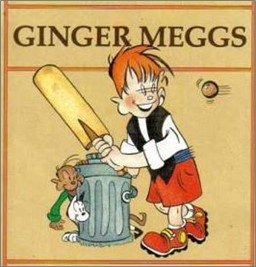
Charlie Somerville loved his cricket. He joined the Gordon District Cricket Club near the end of its inaugural season in 1905-06 at the age of 21 and played 7 games. The next season however he picked up 47 wickets in third grade at an average of 11.66. Charlie was a storekeeper by trade and worked for his father’s produce store in Hornsby.
With work taking precedence Charlie played as much cricket as he could and played most seasons between 1905 and 1914. Charlie played in both seconds and thirds and during that time took 118 wickets and scored nearly 1000 runs batting in the middle order.
As Charlie was 30 when the war came he wasn’t part of the early recruitment drive and would have listened in horror of the events of Gallipoli and the early battles on the Western Front. The war became one that had to be grimly endured, and the first flush of enthusiasm for the war and the achievement at Gallipoli soon led to a more harsh and realistic attitude as over time, the death and casualty lists increased. What would have Charlie thought when the time came to help our diminishing troops as the impact of Gallipoli and the Western Front were at their most devastating?
So at the age of 31, just before the start of the 1916 season Charlie enlisted and was shipped to England and then France in December 1916. The description of Charlie on his application form was “Florid complexion and red hair”.
After training Charlie was posted as a driver to a division of the 4th Australian Infantry known as the 4th Divisional Ammunitions Column. In May 1917 Charlie was “taken on strength” to France and it was Charlie’s job to get the ammunition, artillery and machine guns to the front line and constantly move among the troops during their attacks.
When Charlie joined the Division it had moved to Flanders and was in constant action through to November, supporting allied attacks on Messines, Menin Road, Polygon Wood, Broodseinde, and then Passchendaele, as part of the Third Battle of Ypres. During this period, the brigade suffered its heaviest casualties of the war. Passchendaele of course was the battle where Gordon and NSW cricketer Doctor Gother Clarke was killed while attending to his patients in the field.
When the Germans launched their Spring Offensive in March 1918, the brigade supported the Australia Corps as it absorbed the German push. When the Germans broke through to Villers-Bretonneux the next month, the 4th consequently moved to the Somme. In August, when the Australian offensive began, the brigade supported the infantry, as the Australia Corps moved through Peronne, Mont St Quentin, Bellicourt, and the Hindenburg Line. Exhausted from combat and illness, the brigade was relieved on 18 October.
The 4th Division including Charlie was moving through Peronne on 11 November when it received news of the Armistice. The brigade’s war diary recorded that the “news was taken quietly by the troops”. Naturally exhausted, Charlie then returned to England and was granted leave for two months in Ireland to undertake a “study of horses” in County Fermanagh in Northern Ireland.
Charlie returned from the war in September 1919 and settled back in Hornsby at his father’s store. During this time there was a young author by the name of James Bancks who had lived in Hornsby during his youth and had remembered the joys and tribulations of urban life: the joys of cricket and football, and in particular a red haired boy who worked at his father’s Produce store.
In 1921 James Bancks put his memory of that boy Charlie Somerville to print in a cartoon strip called “The adventures of Ginger Meggs” and as they say the rest is history. Ginger Meggs became and still is a legendary figure in Australian cartoon history.
Charlie married Gladys Mattingly after the war and they had 4 children who continued to live in Hornsby before some moving to the country.
A privately published book “A Taste of Ginger” was released in 2002 which was a story of a Hornsby Institution - the Old Produce Store, the Somerville's, Ginger Meggs and the many people and places that have made up history of Hornsby.
Charlie died in 1967 at the age of 82 and is buried in the Macquarie Park Cemetery in North Ryde. We remember the people that sacrificed so much to fight for our country. Charlie was one who came home and is now forever known as Gordon cricket’s Ginger Meggs.
Paul Stephenson

BeaconPoint Club Clips - Why Spin Wins with Mark Higgs: The Key Role of Spin Bowling in Team Success